Text updated: June 2, 2026
In 2026, the competition for top talent is more intense than ever. Candidates have more options, higher expectations, and near-total transparency into what it's actually like to work at your company. At the same time, businesses need to grow, adapt, and retain key people in a job market defined by structural skills shortages and rapidly shifting candidate behaviour.
According to ManpowerGroup's 2026 Talent Shortage Survey, 77% of employers globally report difficulty filling positions – the highest level in 17 years. And it's not just a global trend. In Sweden, more than half (52%) of companies say they face major obstacles due to difficulties finding qualified candidates (Svenskt Näringsliv, 2025).
This is exactly where your Employer Brand – and your Employer Branding strategy – can make or break your ability to hire.
What is an Employer Brand?
Your Employer Brand is how you are perceived as an employer by potential candidates, existing employees and former employees. Think of it as the reputation of your workplace – a reputation that exists whether you actively manage it or not.
A strong Employer Brand results in, on average:
- More relevant applications per open position
- Faster recruitment processes
- Reduced recruitment costs
- A lower staff turnover.
A weak Employer Brand, on the other hand, can make it difficult to fill open positions, which often leads to increased workloads for existing staff, turning down business opportunities, and failing to grow. Resulting in:
- Increased workloads for existing staff
- Having to turn down business opportunities
- Failing to expand and grow
Want practical tips? Read our guide on how to strengthen your Employer Brand.
What is Employer Branding?
But what does Employer Branding mean? And why is it so important? Employer Branding is the active, strategic work you do to influence how you are perceived as an employer – by potential candidates, existing employees, and former employees.
The key distinction is:
- Employer Brand = how you are perceived
- Employer Branding = how you work to influence that perception
By working strategically and data-driven with Employer Branding, you can reinforce, improve, or fundamentally change how the market views you as a workplace.
Examples of Employer Branding activities:
- Creating targeted social media campaigns about working at your company
- Building an engaging and conversion-optimised career site
- Developing your Employee Value Proposition (EVP)
- Attending recruitment events and career fairs
- Conducting employee surveys, exit interviews, and in-depth candidate research
- Offering competitive compensation, flexible work models, and clear career development paths
- Encouraging Employee-Generated Content (EGC)
- Investing in leadership training and wellness programs
- Running always-on Recruitment Marketing campaigns
A strong Employer Brand leads on average to:
+ More applications per open position
+ More top candidates per open position
+ Faster recruitment processes
+ Lower employee turnover
+ Lower cost per hire
+ Higher employment rate
+ Long-term matches
A weak Employer Brand yields on average:
- Fewer applications per open position
- Fewer top candidates per open position
- Difficult to fill open positions
- High employee turnover
- Higher recruitment costs
- High workload
- Short-term matches
What is the difference between internal and external Employer Branding?
When working with Employer Branding, it's important to distinguish between internal and external Employer Branding.
Internal Employer Branding means actively working to be perceived as an attractive employer among your existing staff. This includes culture-building, internal communications, leadership development, and employee engagement initiatives.
External Employer Branding means working to be perceived as an attractive employer by potential candidates, consumers, and other stakeholders. This includes social media campaigns, career site content, job advertising, and Employer Branding advertising.
Building a strong Employer Brand requires a good balance between internal and external Employer Branding. If you only work with external Employer Branding, there's a risk that your existing staff feels overlooked – or that the image you portray doesn't match reality. On the other hand, if you only work internally, you risk limiting your ability to reach top candidates.
The most successful employers in 2026 treat internal and external Employer Branding as two sides of the same coin – connected, consistent, and mutually reinforcing.
Why is Employer Branding important in 2026?
The talent market in 2026 is defined by a structural imbalance: skilled candidates are scarce, expectations are rising, and AI-powered search tools are changing how people discover employers. Here's why Employer Branding has moved from "nice-to-have" to business-critical.
The talent shortage is at record levels
75% of employers worldwide report difficulty filling skilled positions, particularly in technology, healthcare, and engineering (Adecco, 2026). In Sweden, 7 out of 10 companies experience recruitment difficulties, and 1 in 4 recruitment attempts fails completely (Svenskt Näringsliv, Rekryteringsenkäten 2025/2026).
Candidates are doing more research than ever
- 86% of job seekers research a company's reviews and ratings before deciding where to apply (Glassdoor)
- 75% of candidates research employer reputation before applying (Glassdoor)
- Only 3 out of 10 candidates are actively looking for a new job – the remaining 70% are passive candidates who need a reason to consider your company (LinkedIn Talent Trends)
The ROI of Employer Branding is well-documented
Companies that actively invest in Employer Branding consistently see:
- +50% more qualified applications (LinkedIn)
- 50% lower cost-per-hire (LinkedIn)
- 1–2x faster hiring processes (LinkedIn)
- 28% reduction in employee turnover (LinkedIn)
If you want to scale, attract top performers, and stay competitive in today’s job market, your Employer Brand needs to be a strategic priority.
AI is reshaping how candidates find employers
AI-based search tools like ChatGPT, Perplexity, and Google's AI Overviews are now gathering information from across the internet – your career site, social media, job ads, and review sites – and combining it into a single summary of you as an employer. This means your Employer Brand needs to be consistent, clear, and authentic across every digital touchpoint.
Want the full picture? Explore the 6 Employer Branding trends shaping 2026.
Employer Branding vs. Employer Marketing: What's the difference?
While Employer Branding focuses on building long-term awareness, trust, and reputation, it works best when connected to performance-driven recruitment.
This is where Employer Marketing comes in – a unified methodology that combines Employer Branding with Recruitment Marketing into one connected system.
Instead of treating brand building and job advertising as separate tracks, Employer Marketing brings them together across four phases: Discover, Engage, Connect, and Convert. The result is a system where your long-term Employer Brand and your short-term hiring needs reinforce each other continuously.
Explore how it works: What is Employer Marketing? A complete guide | Employer Marketing product page
Three signs your company needs to prioritise Employer Branding
Not sure if it's time to invest? Here are three clear indicators.
1. You're planning to grow
You have ambitious growth targets and need to scale your team – especially in competitive functions like tech, sales, or engineering. Without a recognisable Employer Brand, you'll be outbid by companies that candidates already know and trust.
2. You're going through a company change
Whether it's a merger, digital transformation, or repositioning, you'll need to attract a new type of candidate and establish what your workplace stands for now. A refreshed Employer Brand is essential for signalling that change to the market.
3. You're struggling with recruitment
Few applications, long time-to-fill, high turnover, or heavy reliance on expensive recruitment agencies? These are symptoms of a weak Employer Brand – and they're costing you more than you think.
How to get started with Employer Branding
Getting started doesn't have to be overwhelming. By working data-driven and insight-based, you can build momentum quickly. Here's a proven framework:
- Current situation analysis, goal setting & research – Define what you want to achieve and where you stand today. Read: Step 1 for Employer Branding success
- Development of your EVP – Define the unique value you offer as an employer. Read: What is an EVP?
- Evaluation & internal anchoring – Test your EVP with employees and stakeholders
- Launch, activation & advertising – Bring your Employer Brand to life across channels. Read: 5 steps to a Recruitment Marketing strategy
- Reporting & insights – Measure what works and optimise continuously
- Repeat – Employer Branding is always-on, not a one-time project
Download the full guide: How to Get Started with Employer Branding (e-book)
How do you measure your Employer Branding efforts?
To measure impact, start by clearly defining the purpose of your Employer Branding work. Is it tied to growth? A transition? Specific recruitment challenges? Once you have a clear goal, you can select the right KPIs and conduct a baseline analysis to track progress over time.
Common Employer Branding metrics
- Average cost per hire per department / month
- Number of career site visitors / month
- Average number of applications (total and relevant) per department / month
- Average time-to-fill / month
- Number of job subscribers / month
- Staffing rate per department / quarter
- Staff turnover / quarter
- Quality of Hire / quarter
Benchmark with weselect
With weselect, you can compare your Employer Branding metrics against industry averages – giving you a clear picture of where you stand and where to improve. Metrics include cost per hire, career site traffic, application volume, time-to-fill, staffing rate, and more.
Go deeper: How to Measure the Effects of Employer Branding (e-book)
Employee Branding: The 2026 multiplier
While Employer Branding focuses on how your organisation is perceived from the outside, Employee Branding is about how your employees themselves represent your brand – both online and offline.
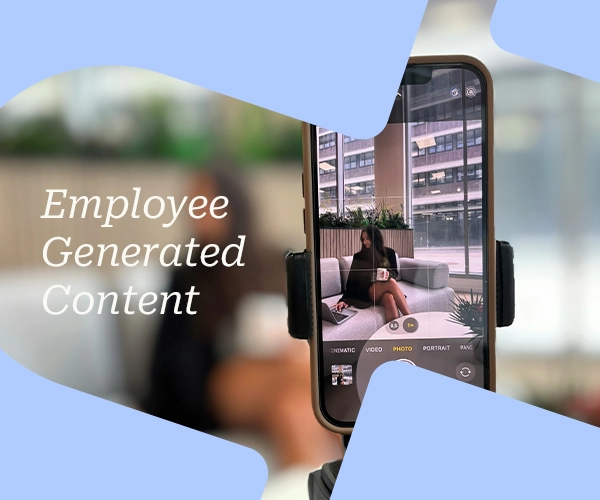
In 2026, one of the most powerful ways to strengthen your Employer Brand is through Employee-Generated Content (EGC). This means encouraging employees to share authentic experiences from their work life – on LinkedIn, Instagram, TikTok, or in internal communications.
Why does EGC work so well? Because people trust people more than brands. A candidate is far more likely to believe a genuine post from a team member than a polished corporate ad. Companies that embrace EGC build trust, create a culture of advocacy, and boost both engagement and brand visibility.
This is also an important consideration for attracting Gen Z talent, a generation that values transparency and authenticity above all else.
Read more: Employer Branding vs. Employee Branding – what's the difference?

FAQ: Employer Branding in 2026
What is Employer Branding?
Employer Branding is the strategic work you do to actively influence how you are perceived as an employer by potential candidates, current employees, and former employees. It encompasses everything from your EVP and career site to social media campaigns and employee advocacy.
What is the difference between an Employer Brand and Employer Branding?
Your Employer Brand is how you are perceived as an employer – your workplace reputation. Employer Branding is what you do to shape and influence that perception. One is the result; the other is the process.
Why is Employer Branding important?
Employer Branding directly impacts your ability to attract qualified candidates, reduce hiring costs, speed up recruitment, and retain employees. In 2026, with 77% of employers globally struggling to fill positions, a strong Employer Brand is a competitive necessity.
What is an EVP?
An Employee Value Proposition (EVP) is the unique value you offer as an employer – covering everything from culture and career development to compensation and flexibility. Your EVP forms the core of your Employer Branding strategy.
What is the difference between Employer Branding and Recruitment Marketing?
Employer Branding builds long-term awareness and trust. Recruitment Marketing turns that awareness into action through targeted campaigns, job advertising, and data-driven optimisation. The most effective approach combines both into what weselect calls Employer Marketing.
What is Employee Branding?
Employee Branding is about how your employees represent and promote your workplace – through authentic content, advocacy, and their own networks. It's one of the most powerful ways to strengthen your Employer Brand.
How do you measure Employer Branding?
Common metrics include cost per hire, time-to-fill, number of applications, career site traffic, staffing rate, staff turnover, and quality of hire. Download our measurement guide for a step-by-step approach.
What does Employer Branding cost?
The cost varies based on scope – from targeted social media campaigns to full-service strategy, content production, and advertising. Book a free consultation with weselect to get a tailored recommendation.
What are the biggest Employer Branding trends for 2026?
Key trends include always-on Employer Branding, Employee-Generated Content (EGC), AI-optimised employer presence, audience-specific targeting, and the shift from isolated Employer Branding to unified Employer Marketing. Read the full trends breakdown.
Your Employer Brand is a 2026 business priority
Employer Branding isn't a side project – it's a strategic investment that directly impacts your ability to grow, compete, and retain the people who drive your business forward. In a market where 75% of employers struggle to fill roles and candidates research you before they ever apply, your Employer Brand is often the deciding factor.
By taking a strategic, data-driven approach – and connecting your Employer Branding with your Recruitment Marketing through a unified Employer Marketing system – you'll build an Employer Brand that doesn't just resonate today, but continues to deliver results far into the future.
Ready to get started? Book a free consultation with weselect and discover how strategic Employer Marketing can help you attract the right talent, reduce hiring costs, and support your growth in 2026 and beyond.
Text updated: 2 June 2026